Complete Guide to Industrial Machinery Transport Costs, Logistics Constraints and Key Pricing Factors
When a company invests in new industrial machinery, transportation is often considered only at the final stage of the project. However, it is a critical component of the overall budget.
A hydraulic press purchased in Germany, a production line sourced from Poland, or a machining center acquired in Italy must be transported under highly controlled conditions. Unlike conventional freight loaded on a few pallets, industrial machinery often weighs several dozen tonnes, features oversized dimensions, and can represent an investment worth hundreds of thousands of euros.
In this context, transport costs are determined by much more than distance alone. They result from a combination of technical, regulatory, and logistical factors that make every operation unique.
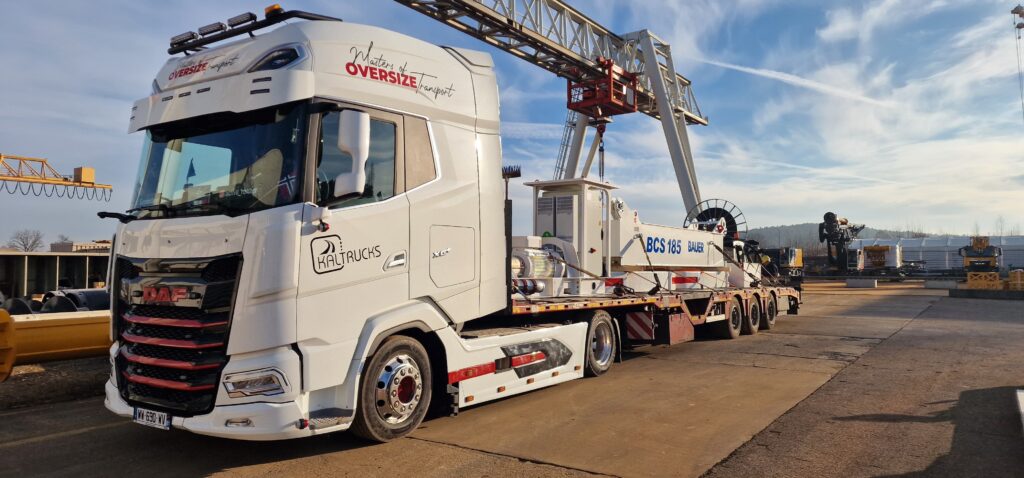
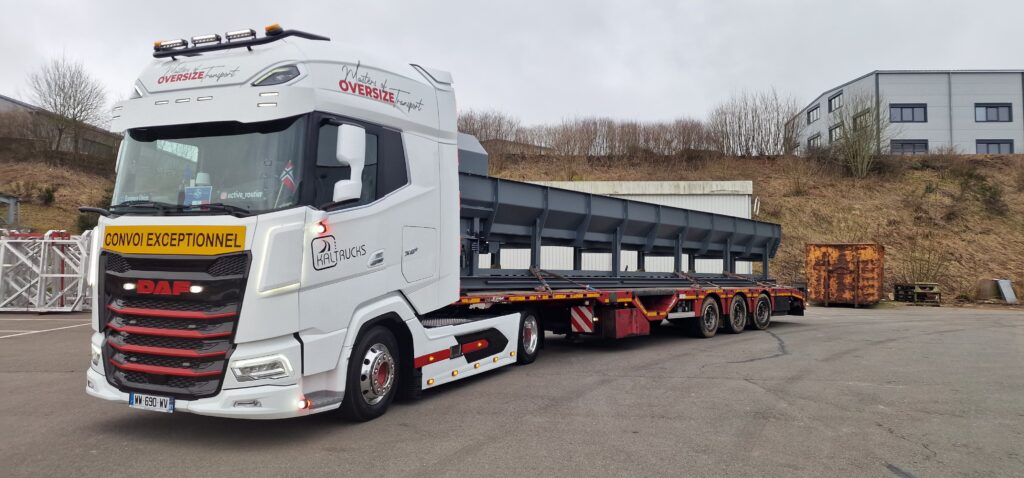
At KALTRUCKS France, we organize industrial machinery transportation throughout Europe on a daily basis. From equipment weighing only a few tonnes to complete industrial installations, every project is subject to a dedicated feasibility study to ensure cargo safety, delivery reliability, and cost optimization.
So, what does it actually cost to transport industrial machinery across Europe? Which factors influence pricing? How can unexpected costs be avoided? And most importantly, how can companies optimize their transport budget without compromising operational safety?
🌍 Why Is Industrial Machinery Transport So Specialized?
At first glance, industrial machinery may appear to be nothing more than a heavy object that needs moving from point A to point B.
The reality is far more complex.
Industrial equipment often differs significantly from conventional freight. Some machines are extremely heavy yet relatively compact. Others have oversized dimensions while remaining comparatively lightweight. Certain equipment requires specialized handling procedures or specific protective measures during transit.
Take the example of a CNC machining center manufactured in Germany.
Such equipment can weigh between 15 and 30 tonnes and represent an investment of several hundred thousand euros. A single mistake during loading or load securing can result in extremely costly damage.
For this reason, industrial machinery transportation is never just a standard road haulage operation.
🚛 Transport Costs Depend Primarily on the Type of Machinery
Not all industrial machines involve the same level of logistical complexity.
A standard 5-tonne machine tool does not generate the same operational requirements as a 50-tonne industrial press or an entire production line.
Some machines can be loaded easily using a forklift truck.
Others require:
- Mobile cranes
- Industrial gantry systems
- Specialized lifting equipment
- Hydraulic jacking systems
The more complex the handling operations become, the higher the overall project cost. This is often an aspect that companies underestimate when purchasing equipment.
💰 What Is the Average Cost of Transporting Industrial Machinery?
This is naturally the most frequently asked question. Although it is impossible to provide a universal rate applicable to every project, the following price ranges offer a useful benchmark.
For standard machinery transportable on a flatbed trailer or curtainsider:
| Distance | Indicative Cost |
|---|---|
| 200 km | €600 – €1,200 |
| 500 km | €900 – €2,000 |
| 1,000 km | €1,500 – €3,500 |
| 2,000 km | €3,000 – €6,000 |
These figures apply to machinery that can be transported without requiring special permits or exceptional transport arrangements.
Once dimensions or weight exceed regulatory thresholds, costs can increase significantly.
🏗 A 20-Tonne Machine Is Not Necessarily More Expensive to Transport Than a 5-Tonne Machine
This often surprises industrial buyers.
Weight is not always the primary cost factor.
A 20-tonne machine measuring 2.50 metres in width may sometimes be easier and less expensive to transport than an 8-tonne machine measuring 4 metres wide.
Why?
Because regulatory constraints related to dimensions often have a greater impact than weight itself.
As long as a machine remains within standard European road transport limits, transportation costs generally remain manageable.
However, once certain dimensional thresholds are exceeded, the logistics become considerably more complex.
🚨 When Transport Becomes an Oversized or Abnormal Load Operation
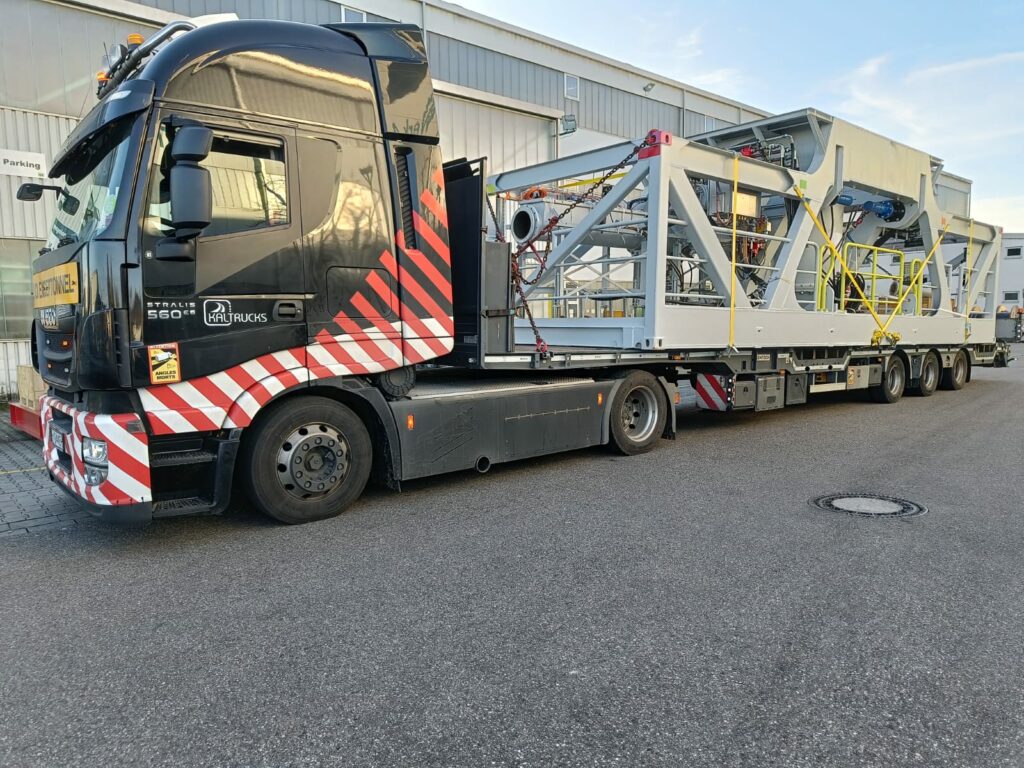
Some industrial machines require abnormal load transportation.
This typically applies when equipment exceeds:
- Maximum legal width
- Height restrictions
- Standard length limits
- Gross vehicle weight limits
In such situations, it may be necessary to arrange:
- Special transport permits
- Route surveys and engineering studies
- Specialized low-loader trailers
- Escort vehicles or pilot cars
These requirements directly impact the final transportation cost.
A machine measuring 4 metres in width transported between France and Germany will generally cost substantially more than a machine twice as heavy but remaining within standard transport dimensions.
🌍 Transport Costs Vary Significantly Across European Countries
The industrial transport market is heavily influenced by national regulations.
Each country applies its own rules regarding:
- Oversized and heavy haul permits
- Traffic restrictions
- Administrative procedures
A shipment from France to Germany does not necessarily generate the same costs as a transport operation between France and Italy or France and Poland.
Eastern Europe has become particularly dynamic in recent years. Many French manufacturers now buy and sell industrial equipment in:
- Poland
- Czech Republic
- Slovakia
- Hungary
- Romania
Although longer distances naturally increase transport costs, these markets also offer substantial industrial opportunities.
🏭 The Particular Case of Industrial Relocations
Transporting a single machine remains relatively straightforward compared with a complete industrial relocation.
When a factory relocates an entire production line or transfers multiple machines simultaneously, the logistical challenge becomes far more complex.
Such projects may include:
- Dismantling
- Component identification and labeling
- Transportation
- Heavy lifting and handling
- Reassembly
- Commissioning and restart
In these situations, transportation may represent only a portion of the overall project budget. Coordinating every stage becomes essential.
🚛 The Importance of Handling Operations in Total Project Costs
One of the most common mistakes is to focus solely on road transportation costs.
In reality, handling operations often account for a significant portion of the overall budget.
Some machines are located:
- In basements
- Inside operational factories
- In areas with limited accessibility
Loading operations may therefore require:
- Mobile cranes
- Hydraulic gantries
- Specialized industrial transport skates
These services require highly specialized expertise and must be considered during the quotation phase.
📦 Why Is Load Securing So Important?
An industrial machine can represent several hundred thousand euros in value.
During transportation, it is subjected to:
- Acceleration forces
- Braking forces
- Vibrations
- Road-induced stresses
Improper load securing can result in major damage.
At KALTRUCKS, every machine undergoes a dedicated transport assessment to determine:
- The number of lashing points required
- Appropriate securing straps
- Restraining chains
- Protective materials and equipment
This process is essential to ensuring cargo safety.
⚡ Express Transportation for Industrial Machinery
Urgency is another major cost factor.
In certain situations, companies need to recover machinery rapidly in order to:
- Restart production lines
- Meet project deadlines
- Fulfil urgent customer orders
In these cases, it may be necessary to mobilize immediately:
- A dedicated transport vehicle
- A qualified driver
- Specialized lifting and handling equipment
Naturally, express transport services are more expensive than shipments planned several weeks in advance.
📈 Why Have Transport Costs Increased in Recent Years?
The European industrial transport sector has experienced several major changes.
Costs are influenced by:
- Fuel prices
- Road tolls
- Regulatory requirements
- Availability of specialized drivers
- Administrative constraints
At the same time, customer expectations have increased significantly.
Industrial clients now demand greater:
- Shipment visibility and tracking
- Safety standards
- Responsiveness
- Transparency
These evolving requirements inevitably affect operational costs.
🌍 How Can Industrial Transport Costs Be Optimized?
The most effective strategy is often proactive planning.
The earlier a project is prepared, the easier it becomes to:
- Optimize transport routes
- Consolidate operations where possible
- Select the most suitable equipment
- Avoid costly emergency arrangements
Many companies save several thousand euros simply through improved logistical planning.
🚛 Why Choose KALTRUCKS for Industrial Machinery Transportation?
At KALTRUCKS France, we support industrial companies throughout Europe with specialized transport solutions.
We regularly handle:
🏭 Machine tools
⚙️ CNC machining centers
🔩 Industrial presses
🏗 Production equipment
🚜 Agricultural and industrial machinery
🌍 International industrial relocations
Our objective is simple:
To provide technically appropriate transport solutions while optimizing our clients’ logistics costs.
📞 Need a Quote for Industrial Machinery Transport in Europe?
Do you need to transport:
🏭 A machine tool
⚙️ Industrial equipment
🔩 An industrial press
🏗 A production line
🚨 Oversized machinery
Anywhere in Europe?
The KALTRUCKS France team will assess your project free of charge and provide the most suitable solution based on your technical and budgetary requirements.
📞 +33 6 22 49 72 28
👉 Request your personalized quotation today for your industrial machinery transport requirements across Europe.